Updated 10/26/21
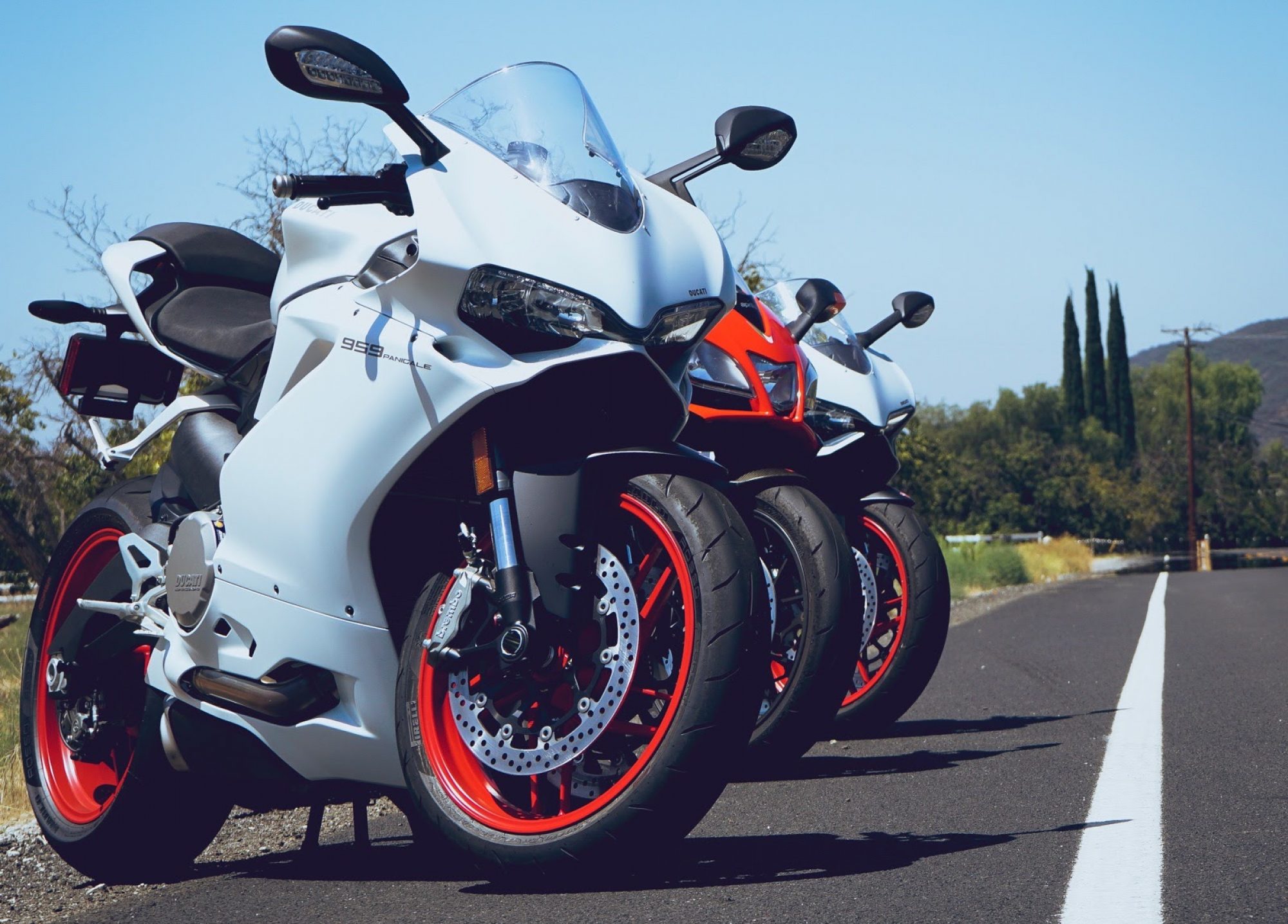
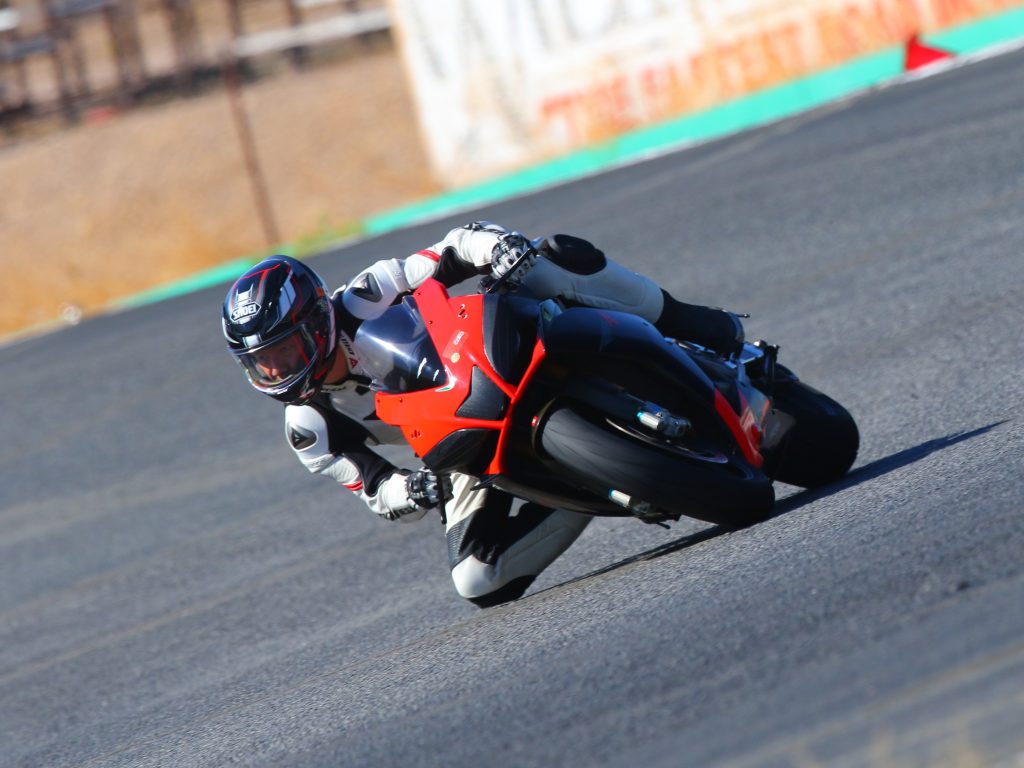
One of the best things you can do with your sportbike is take it to the local racetrack for a motorcycle track day and really let it loose. Once you’re out there flying down the straights and carving corners without the police, cliffs or SUVs to worry about, you’ll be hooked.
It seems like a daunting task to make it out to a motorcycle track day, but the good news is that it’s really not that difficult. It takes some effort, but I had so much fun my first time out that I knew the effort would always be worth it. Let’s take a deeper dive into our motorcycle track day starter guide.
Costs
Track day organizers will rent out the local racetrack for a day or weekend, paying the track owner a negotiated fee. Then they’ll turn around and ask the attendees (you) to pay a fee in order to ride that day. The organizer is responsible for running the event and making sure everything goes safely, including having an ambulance on site. Here in southern California, track days tend to be around the $190 – $200 range. The track owner will also charge a small gate fee when you enter the track, maybe $15-$20 per person.
Motorcycles
You need a track-capable motorcycle to be allowed on the course. It doesn’t have to be a race bike but should have a sporting nature. Of course every track day is filled with the usual pack of Ducati and Yamaha superbikes, but I’ve also seen plenty of naked bikes, Kawasaki Ninja 400s and even supermoto bikes on the smaller tracks. If in doubt, contact a local track day organizer and ask them if your bike is suitable for a track day.
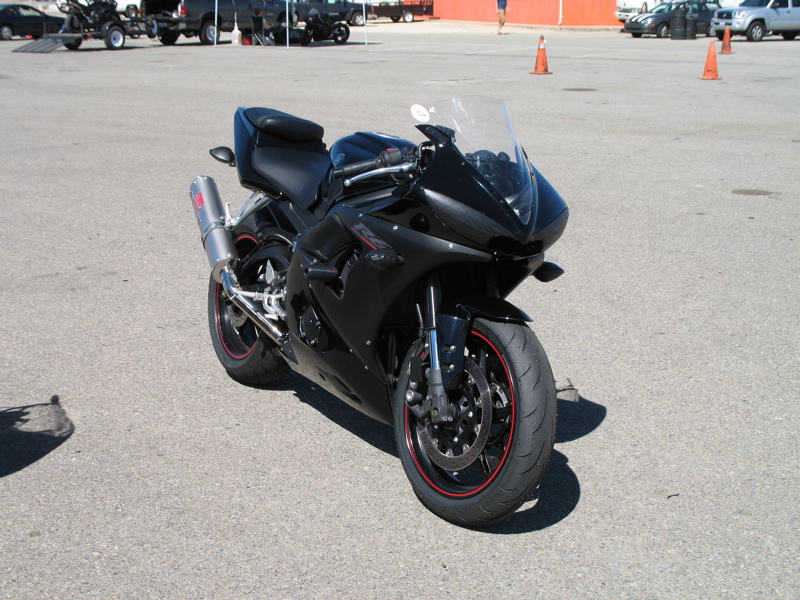
Your bike will also have to pass a technical inspection when you arrive. Here’s what you can expect as far as prepping it for the track (do this at least the day before if not earlier):
- Completely cover all lights and reflectors with painter’s tape; this will prevent broken plastic from flying all over the track if you crash
- Remove mirrors
- Disconnect headlights so they don’t melt your headlight covers underneath the tape
- Remove or tape over license plate
- New or almost new sport tires, properly inflated
- Wheel weights taped over (those little lead weights on the inside of your wheel, used for balancing); use duct tape
- No leaks, everything properly tightened and secure
- Chain in good condition and at proper tension
Protective Gear
You will be required to have the following protective gear in order to ride at the track, no exceptions:
- Full-face DOT/Snell approved helmet
- 1 or 2-piece leather suit (2-piece suits must have a full-circumference zipper joining the jacket and pants)
- Race-style gauntlet gloves that cover all of your hands and wrists, typically going about 1/3 of the way up your forearm
- Motorcycle boots that fully cover the ankles
- Back protector (sometimes optional)
Transporting Your Bike
This is the trickiest part of attending a track day as most of us don’t have a ready way to haul a motorcycle to the track. Do not ride your bike to a track day; you’d have no ride home if you crash at the track, you’d have to do/undo all the prep work at the track, and you’d be exhausted at the end of the day. I highly recommend the following items regardless of whether or not you have a hauler. If you hitch a ride with a friend or rent a truck, these things will be needed to secure your bike anyway:
- 4 ratcheting tie-downs per bike, rated past your bike’s full wet weight (you may only need 2 to tie down the front handlebars, but it’s good to have the extras in case they’re needed to secure the rear of the bike)
- Bar harness to help secure the handle bars (e.g. Canyon Dancer)
There are three ways people generally transport their bikes:
- Pickup trucks – as long as it’s got tie-down loops in the front corners of the bed, you just need a good ramp (do NOT buy cheap loading ramps) and two friends to help push it up and back it out. One bike is simple; just put it in the center of the bed and use tie-downs in the front. For two bikes, you’ll need to position the bikes carefully so they don’t bang into each other, and run the inside tie-downs through the other bikes’ front wheel. You can use the extra tie-downs to secure the swing arms or rear wheels to the bed to keep the rear ends from moving around.
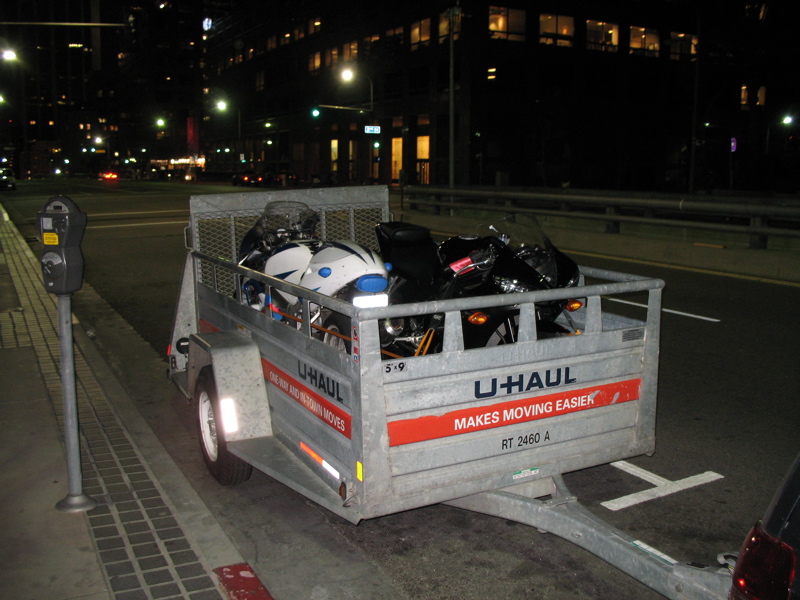
- Trailers – if you have a vehicle capable of pulling a trailer and the patience to drive slower than usual to avoid a ticket, it’s a great option. There are many varieties of trailers for purchase or rent, even ones specifically for motorcycles. Just make sure it has tie-down loops and/or a good way to properly secure the bikes. Trailers are low, making it easy to get the bikes in and out.
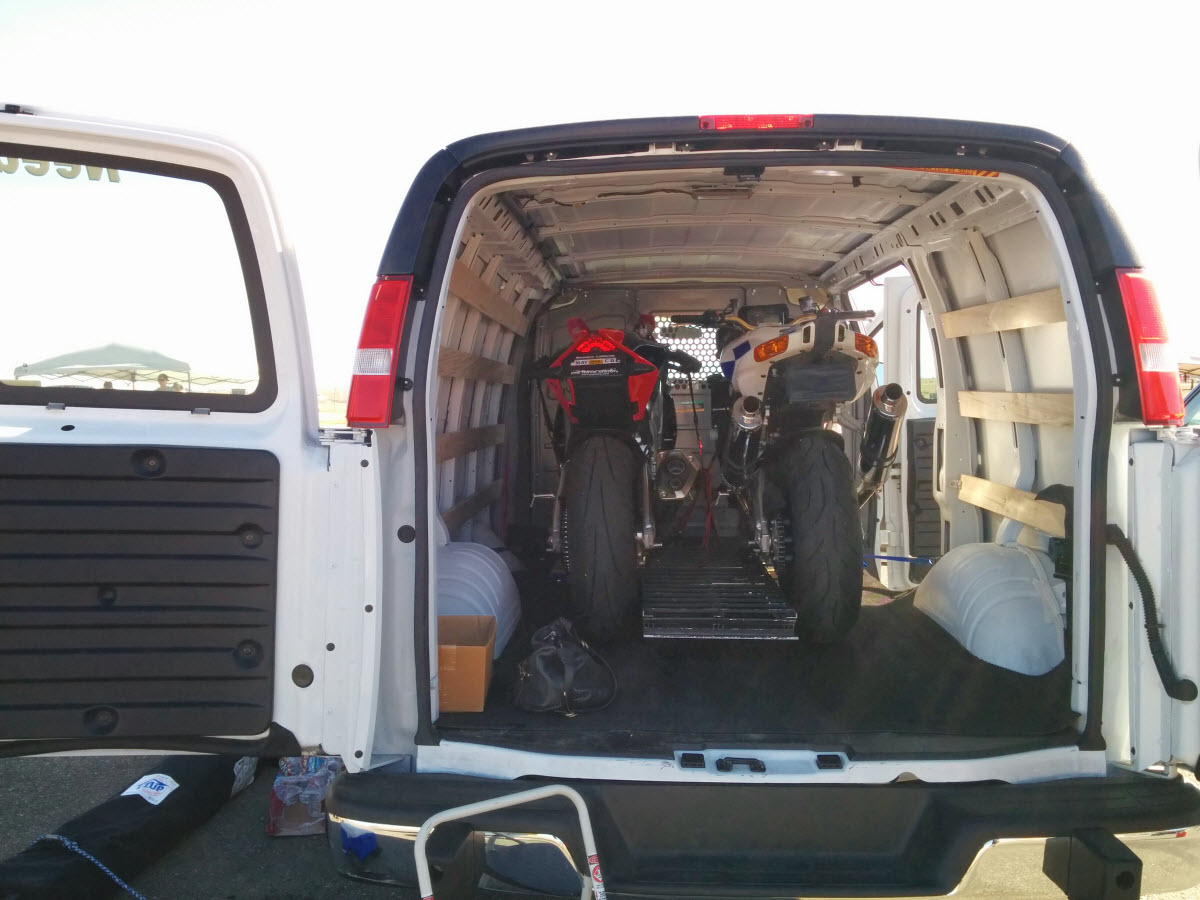
- Cargo vans – if you don’t have a pickup truck or something that can pull a trailer, renting a cargo van or Sprinter van is another option. Tying down the bikes is a little tricky since some cargo vans don’t have tie-down anchors inside, but there’s a way around that. Some riders have built bike anchors using a large wooden board and two motorcycle chocks. The chocks are permanently mounted to the board as well as tie-down loops. The front wheels of the bikes go into the chocks, then the bikes can be secured to the tie-down loops on the board. The board needs to be secured to the inside of the van to keep the bikes from sliding around (there are plenty of places to hook the tie-downs to).
For my first track day I was fortunate enough to have a buddy that was willing to come hang out at the track with me and haul a trailer with my bike in it. I rented a 5’x9′ ramp trailer from U-Haul (which is awesome because you can just ride the bike right into it) and hooked it to the back of his SUV. It’s always a good idea to attend your first track day with other experienced track day riders if possible, and typically that means they’ll help you with the transport as well.
Riding Experience
The most worrisome question I usually get about track days is, “How much experience do I need?” There is no formula for determining when a rider is ready for track days; one person might be ready after 12 months of riding but someone else might need 24. It was 16 months before I hit the track. When I first attended California Superbike School, there was a 16 year old kid who was comfortable on dirt bikes but had never ridden a sportbike. One thing’s for sure — you need to have unconscious familiarity with your motorcycle’s controls. Braking, shifting and leaning your motorcycle into turns should all come naturally. The rest is up to you to determine if you feel like you’re ready to challenge yourself at the track.
Skill Level and Training
You’re probably worried about how fast the other riders are at a track day and whether or not you’ll be able to keep up. The good news is that all track day organizers split the riders into three groups based on ability, usually labeled A, B and C. The A group is the fastest while the C group is reserved for newer riders or those content to run an easier pace and not push too hard. Each group rides for 20 minutes each hour while the other two groups rest up. Your first track day will be spent in the C group.
A good track day organizer will make an effort to welcome and train riders who are new to the track. At the start of the day, newbies get 2 or 3 orientation laps behind a staff rider so they can get a feel for the track and the proper riding lines. All organizers also have staff that will coach you one-on-one, on and off the track. Some even have mini-schools, with short classes between your riding sessions.
As far as getting ready ahead of time, it doesn’t hurt to do a little light reading and get an idea of what it takes to be good at the track. I highly recommend Sport Riding Techniques by Nick Ienatsch. Nick is an excellent writer and accomplished racer; he has written a terrific book that really makes it easy to understand what it takes to be one of the fast people. The book certainly opened my eyes with regard to sport riding and helped me a lot when it came to track days.
Last but not least, there are excellent track schools that can help your riding tremendously. Most are staffed by professional coaches or former professional racers that are ready to give you their secrets. Some are geared toward first-time track riders while others are better for those that have been to the track before. Here are some of the more popular schools in the southern California area that have received a lot of positive reviews:
Typical Track Day Schedule
- Gates open around 7:00 AM
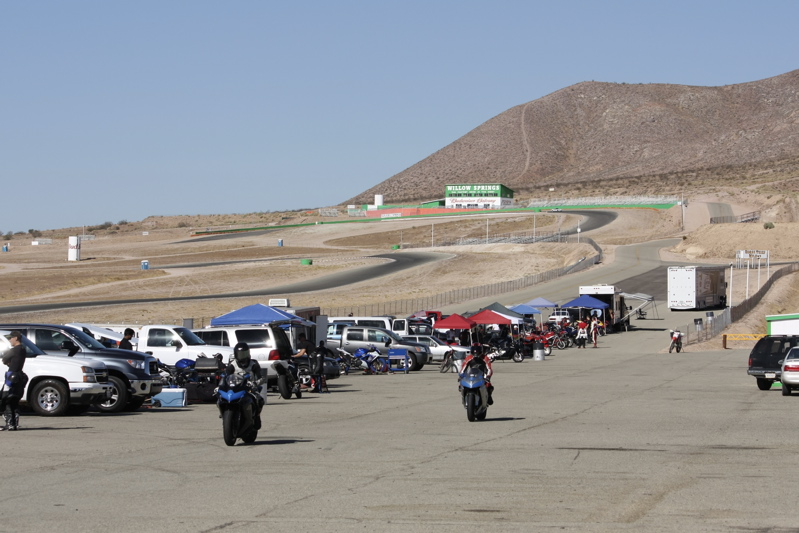
- Arrive as early as possible, find a spot in the pits, unload bikes and set up canopy + chairs
- Registration
- Take bike to tech inspection
- Rider’s meeting (rules, meaning of the different flags, etc.)
- Get suited up
- Riding starts at 9:00 AM; each group rotates and gets 20 minutes at a time
- A group goes first at 9:00 AM
- B group goes at 9:20 AM
- C group goes at 9:40 AM
- Cycle repeats itself each hour
- Last session ends around 5:00 PM
What to Bring
- Motorcycle key! (don’t laugh – people forget them)
- Protective gear: helmet, leathers, gloves, boots, back protector
- Ear plugs
- Health insurance ID card
- Gas jug (get a plastic 5 gallon jug at your local moto parts store; fill your bike’s tank and the jug on your way to the track in the morning)
- Tools
- Tire pressure gauge and/or portable tire inflator
- Painter’s and duct tape in case you forgot to tape something
- Ice chest with food and drinks (not all tracks have concession stands)
- Cash (for the gate fee and in case they have concession stands)
- A comfy portable chair
- Canopy (e.g. E-Z Up, and don’t skimp because it gets windy at some tracks)
- Sunblock
- Change of clothes (check the weather)
Tire Pressures
Tire pressure is so incredibly important at the track; over-inflated tires will have reduced grip while under-inflated tires will flex too much and are a disaster waiting to happen. Recommended tire pressures can be quite different for track riding vs. street riding, even on the same tire. If you’re not 100% sure what tire pressure you should be using at the track, talk to one of the track day staff and they will help you out.
Wrap Up
If you have a sportbike or sport-ish bike, get yourself out to the track to see what that thing can really do. Post a comment if you have any questions or use the contact form on the about page and I’ll be happy to answer them if I can. Have fun!